

“Are we covered?” From Assumptions to Evidence in Security Testing
3 min. reading time – Most organizations can’t say with confidence whether they are covered. SignalFisher’s CEO and co-founder, Sandro Nafzger, and Field CISO, Christophe Németh, discussed how four dimensions of coverage turn security testing from hoping into knowing, and why an honest assessment of coverage, with known gaps and accepted risks, is more valuable than a misleading claim of 100% surface coverage.

Every security leader knows the moment. The board asks, “Are we covered?” and there is no easy answer. Christophe opened the discussion with exactly that dilemma. What is going through your mind might be, “I think so,” or even, “I don't know.” However these are the not the honest answer the board wants to hear. “The attacker just needs one shot, and you never know if you covered everything,” he said. A live poll with the audience confirmed the problem. Asked whether they could quantify and defend their security testing coverage today, 78 percent of participants admitted they estimate it by gut feeling.
From Hoping to Knowing
According to Christophe, confidence today usually rests on a pentest that is months old or an audit from last year. “We are in a world in which we hope and guess.” SignalFisher wants to replace this with quanitfiable knowledge. Coverage, in this definition, is not the certainty of being covered. It's the certainty of knowing what you covered, what you haven't, and the last time each asset was tested. Gaps then become informed, documented risk-based decision making.
Four Dimensions of Coverage
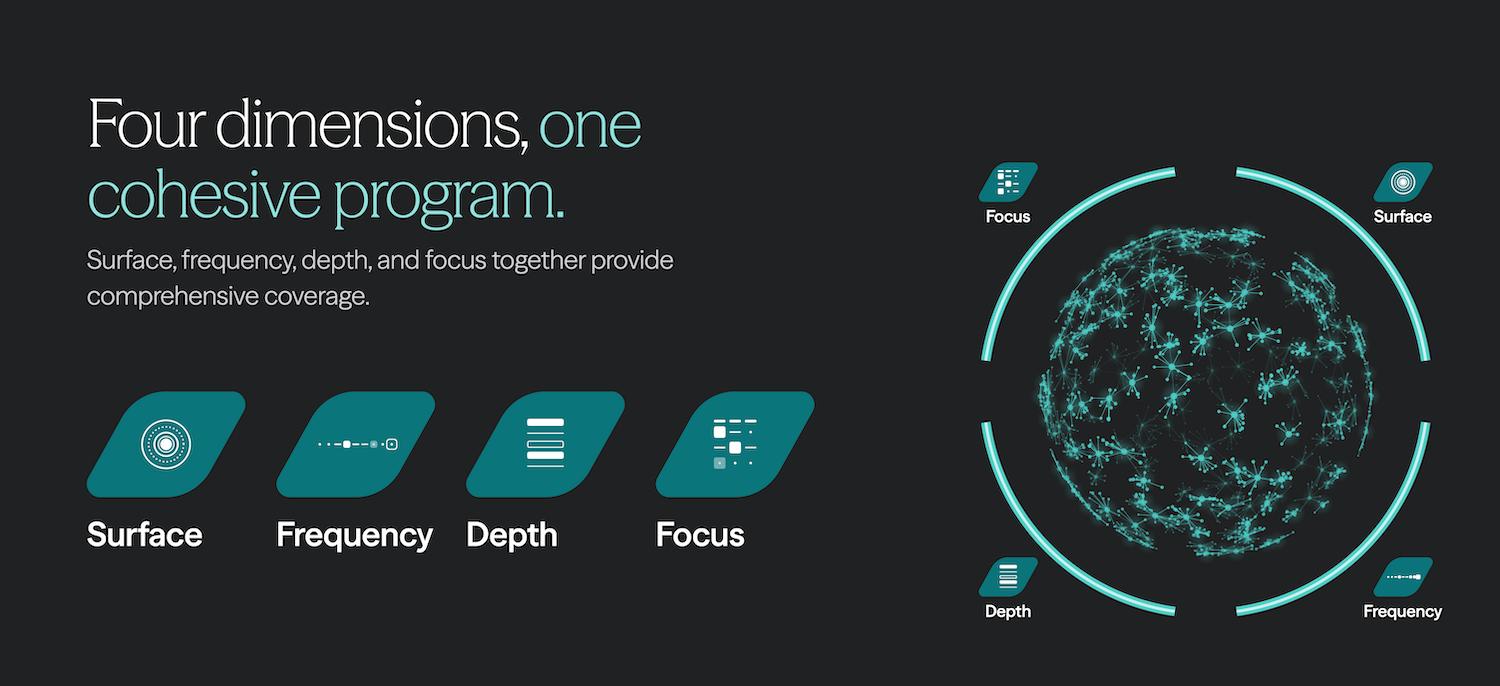
Most organizations equate coverage with surface exposure, meaning the total number of assets tested. For SignalFisher, that is only one of four dimensions of true coverage. Frequency describes how often an asset is tested, depending on its criticality and exposure. Depth describes how intensely it is tested, by either scalable autonomous testing or human-led experts that dive deeper into specific areas depending on the scenario. Focus describes what the purpose of the test and what it is looking for, like whether it's a vulnerability in a web application, misconfiguration or business logic flaw.
The consequences make all the difference. An organization that has tested every asset in regard to surface exposure may consider itself 100 percent covered. Yet, measured across all four dimensions, the same organization might reach only reach 58 percent coverage. “58 percent is not a bad or a good result. It is the reality,” Christophe explained.
The Dam, Not the Water
Sandro added the analogy of a defense barrier that keeps the water at bay. As vulnerabilities pile up, measuring exposure is like watching the water rise. “It's not about how many vulnerabilities there are. It's really about how strong the dam is.” He sees this also as an issue of language. Cyber resilience has become standard in marketing logo and a key strategic topic. In today’s world, fast decisions are the norm, but well-informed decisions are only possible “if we have the C-level and board on the same page with the cyber team.”
Business Criticality and Risk First
The audience was then put on their CISO hat and asked a question, “Faced with significant gaps in your four-dimensional security testing coverage and a limited budget, what would you prioritize?” 86 percent of the audience chose to prioritize coverage based on business criticality and risk. Christophe agreed with this answer, pointing out that today's frameworks and regulations demand exactly such a risk-based approach, informed by business context, threat intelligence, and the varying pressure based on industry.
A Journey, Not a Percentage
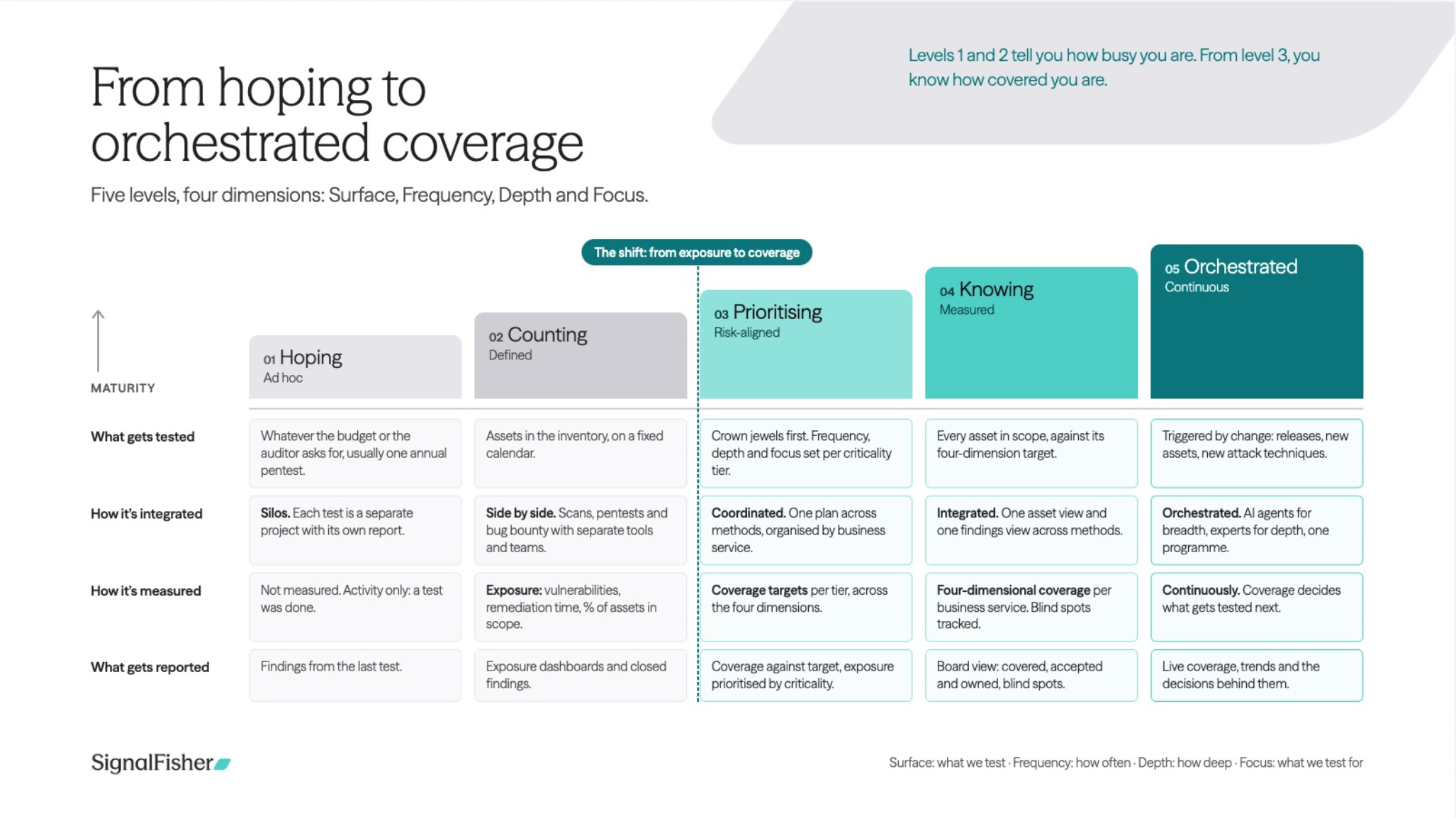
In the final Q&A, Sandro confirmed that an organization’s existing testing tool set can be integrated into the SignalFisher coverage model. SignalFisher sees itself as the orchestration layer supporting the six jobs to be done, from context and strategy to planning and execution, interpretation and mobilization. The biggest bottlenecks lie before and after the testing. Asked what a good coverage percentage is, Christophe said, “There is none, other than a non-zero one. The baseline starts with an inventory of assets grouped into business services, assessed for criticality, attack pressure, and regulatory requirements. It's a journey to maturity.”
Sandro closed the webinar with a call for change. While detection and response have long been automated, prevention remains fragmented and manual. “It's time for a generational update,” he said.
Watch the webinar:
About the author